The Dutch colonials first established tea plantations around the mountains in the eighteenth century, and a road was constructed to connect the plantation area to the capital (180 kilometres (112 miles) to the northwest). The Dutch inhabitants of the city demanded establishment of a municipality (gemeente), which was granted in 1906, and Bandung gradually developed itself into a resort city for plantation owners. Luxurious hotels, restaurants, cafes and European boutiques were opened, hence the city was nicknamed Parijs van Java (Dutch: "The Paris of Java").
 |
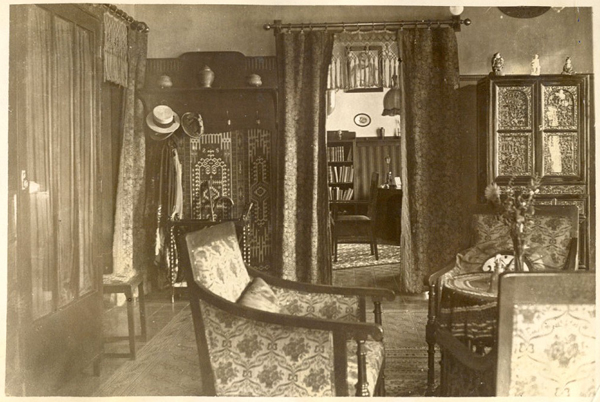
| Foto. Schrijftafels in de werkkamer van een huis aan het Koningsplein West, Batavia |
 |
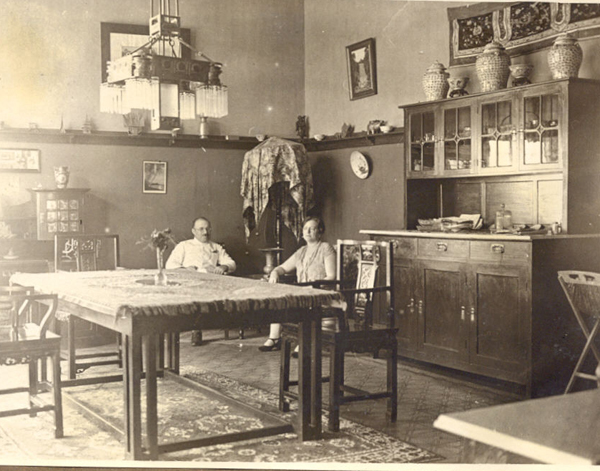
| Foto. De eetkamer in het huis van de familie M.C. Westerman op Kebon Sirih 20 in Weltevreden, Batavia |
Colonial buildings and structures in
Jakarta include those that were constructed during the
Dutch colonial period of
Indonesia. The period (and the subsequent style) succeeded the earlier period when Jakarta (known then as Jayakarta/Jacatra), governed by the
Sultanate of Banten, were completely eradicated and replaced with a walled city of Batavia.
[1] The dominant styles of the colonial period can be divided into three periods: the
Dutch Golden Age (17th to late 18th century), the transitional style period (late 18th century – 19th century), and Dutch modernism (20th century). Dutch colonial architecture in Jakarta is apparent in buildings such as houses or villas, churches, civic buildings, and offices, mostly concentrated in the administrative city of
Central Jakarta and
West Jakarta.
On this picture above you see at the right a cupboard that survived the world war II; I remember it from the Badhuisweg 86 in Scheveningen and it was called 'the chinese cupboard' ('de Chinese kast').
 |
| Foto. Interieur van de vergaderzaal van de Deli Spoorweg Maatschappij in Medan |
 |
| Foto. Interieur landhuis Depan bij Paal Merah, Batavia |
 |
| Foto. Interieur van het huis van H.H. Morison en P.A. Morison-Noordermeer in Rantauparapat |
 |
De brandkasten van de Javasche Bank te Batavia
|
 |
| Foto. De directie vergadert boven in de directievergaderzaal van het gebouw van de Javasche Bank te Batavia. |
 |
| Foto. Gedekte tafel in de eetkamer van het huis van Europeanen op een plantage, Nederlands-Indië |
 |
| Thilly Weissenborn having dinner with her sister Marie Da Paula, her brothers Oscar and Theo and others, Dutch East Indies |
 |
| Foto. De familie C.H. Japing met tante Jet en oom Jan Breeman aan de rijsttafel, Bandoeng |
 |
| Repronegatief. Sultan Maulana Muh. Djalaluddin van Bulungan/Boeloengan (1930-1958). (vgl foto 902-3497 Nationaal Archief). De sultan van Bulungan en zijn echtgenote, Borneo |
 |
| foto. Een plantersfamilie bijeen na gedane arbeid |
 |
| foto. Europees stel bij een pan aan tafel in de voorgalerij van hun woonhuis, met zicht op de huizen aan de overkant |
 |
| Negatief. Europese grootmoeder met haar kleinkinderen aan een gedekte tafel |
 |
| Foto. De heer en mevr. Pietermaat zitten aan tafel in de eetkamer van de administrateurswoning van de suikeronderneming Kalibagor. |
 |
| foto. De familie W.C. van Benthem Jutting op de achtergalerij van hun huis aan de Kebon Sirih in Weltevreden |
 |
| Negatief. Europeanen aan de eettafel |
 |
| Negatief. Portret van een Indische familie op Java aan tafel in de tuin |
 |
| foto. Portret van de heer en mevrouw Velsing zittend op een veranda |
 |
| foto. De familie Bosma. Vader en moeder met vijf kinderen: Atze, Jeltje, Gerard, Annie en Dicky. De oudste zoon had een andere (Chinese) moeder. Hij werkte later als chirurg in Enschede en was daar een van de eersten die lachgas gebruikte.. Portret van een Indische familie |
Coutersy Tropen museum
Indah Sekali........
Sesudah Kemerdekaan
40s-60s
Koleksi Pribadi
Indah bukan? Sudah pasti!
Setelah anda melihat interior-interior Dutch east indies tidak lengkap juga jika tidak melihat exteriornya/bangunannya?
Karena keterbatasan untuk memposting ini saya persembahkan link untuk melihat foto-foto bagunan zaman Belanda atau bagunan kolonial
Dan ada yang menarik sekarang, anda bisa melihat bagunan-bangunan Belanda secara langsung menggunakan google streetview.
Silahkan telusuri!




Tidak ada komentar:
Posting Komentar
Catatan: Hanya anggota dari blog ini yang dapat mengirim komentar.